**All names have been changed.
Ana was born in Mexico, and at the age of 13 was "sold" by her parents to be married to a 42 year old man. A year later she was a new mother, and her husband, bored and uninterested in children, abandoned her. She moved back to live on her parents' farm. After a few years, a drought came, and nearly devastated their crops. A child in a family of 14, many of her older brothers came home to help save the family farm. Her eldest brother lived several miles away, and Ana would often spend days or weeks at a time at his house to help with the crops. One day, while at his house, Ana's brother attacked her. He locked her in his house, and he abused and raped her at his will. Because his house was far from her mothers', it was not unusual for her to not come home for long periods of time, so no one came to look for her. Her captivity lasted for weeks, until one day she was able to escape. When she arrived home, she discovered that her mother had suffered a heart attack and was in the hospital. She told no one about what had happened to her.
Ana visited her mother in the hospital everyday. There she met Pablo, a patient recovering from weeks of captivity and torture by a Mexican gang. Ana and Pablo became friends and stayed in touch. When Ana moved out her mother's house into her own, she offered Pablo a room for rent. They soon became lovers.
By this time, Ana's daughter was 10, and she had a son, 8. One day, Pablo overheard the children fighting and blaming each other. Ana and Pablo approached the children about the conversation, and were horrified at what they heard. While they were at work everyday, Ana's mother, the children's grandmother, took the children to Ana's brothers' house each day, where Ana's daughter was being raped daily. Pablo insisted they go to the police. They brought Ana's daughter to the hospital, and tried to file a police report. However, Ana's brothers were all part of the The Zetas, a large and powerful Mexican gang that has corrupted many police forces throughout the country, including theirs. The police informed her brothers of the "lies" and "defamation" that Ana and Pablo were supposedly trying to spread about them, and threatened to kill them all. Ana and Pablo decided to flee, but the gang followed them to each city that they fled to. Ultimately, they decided that the only way to survive was to disappear. And so they left the country in the middle of the night, telling no one where they were going.
They made it through Mexico and Guatemala, finding bits of work along the way, but in El Salvador encountered more trouble. They were robbed of all their money. A group of men attempted to abduct their daughter. They were ultimately able to find refuge in a church organization, who gave them enough money to get to Costa Rica.
Ana, Pablo, and their children, now 12 and 14, are living in Alajuelita, where our clinic is, trying to find jobs and start over. After years of stints of broken education, their children are finally enrolled in school. But while safe, they are far from recovered. As the psychologist as the clinic put it, they are still in survival mode. They have spent so much time living in fear and constant motion that they don't even know what "normal" is anymore. It is tough to even scrape the surface of the emotions they may have, because there are so many experiences and feelings buried deep down, untouched.
This family is just one of the many impoverished or immigrant families that we see everyday in the FIMRC clinic. They come from unimaginable backgrounds, and have faced tremendous hardships along the way. Families that have been ripped apart and suffered terribly. For many, this is the only place they have been able to seek work, education, medical care, mental health services, and a chance at a better future for their children. It is both challenging and rewarding to have this opportunity to work with them.
Sunday, February 8

Monday, February 2
Adventures in la Isla Chira
(Apologies for the font discrepancies... having technical difficulties)
On to la Isla Chira. Population, 3000.
On to la Isla Chira. Population, 3000.
 |
The five of us, Dra Natalia and her boyfriend Dr Pablo, Tatiana and her four-year old daughter Isabela, Dayan, and another volunteer Luke, ventured on a lancha (boat) along the Gulf of Nicoya (an inlet of the Pacific) towards Costa Rica's second largest island populated by three indigenous villages. We will be running a mobile clinic in three different communities on the island this week, as Chira only has one out-of-town doctor that comes to work at their local clinic 1-2 times a week. The nearest hospital is in the city of Puntarenas, which is accessible only by boat. Access and cost, needless to say, are big issues.


 We are greeted by a couple of thirsty black vultures alongside a turquoise and yellow school bus permeated with dust from the wind. Our young, tanned driver pulls us into second gear down the rocky dirt path. I predict we might be seeing some patients with an impending diagnosis of asthma...
  La Amistad is a "posada" or hostel-style inn where we will be inhabiting this week - a paradise for the nature lover who finds comfort in open wooden cabinas, fresh cold water showers, and natural heating from the sun that sustains our livelihoods... a nightmare for those who prefer heated toilet seats and central air conditioning. We made frenemies with a few furry tarantulas, an extended family of fire ants who decided to have a picnic on Joyce's face, gigantic grasshoppers who were sometimes mistook as tarantulas, Jimminy cricket's cousin, a devil wasp / beetle who was definitely up to no good, The Simple Dog and his soon-to-be wife Simps, the overly-machismo iguana and his Zumba master crawler compañero, the annoying mysterious morning bird / salamander hiding in the ceiling cackling and mocking the humans, and a few other unidentifiable creatures hidden in the darkness of the night that we may never have the privilege to meet.
 |

We learn very quickly to accept the fact that there will be a constant exterior layer of sticky salty sweat mixed with dried sunscreen and greasy DEET permeating our bodies. Suffice to say, it isn't the sexiest moment of our lives.

We dove right in. Tati assigned each of us patients, grouping them by families. Many arrived as early as 6am to wait for us. On average, each of us saw 8-12 patients from start to finish. We were their receptionist; their nurse; their doctor; their pharmacist. After presenting each case to Drs Natalia or Pablo, forming a diagnosis and plan, and educating / counseling our patients, we dose and fill their medications (thank you donors!) and explain to them the instructions before sending them on their way.
217 patients later... many untreated skin infections (some that were clearly septic), untreated urinary tract infections (many in young kids, some which have spread to the kidneys), sugars ranging from 52 to 508, misdiagnosed hyperthyroidism which was actually hypothyroidism, lots and lots of back / leg / neck pain, neglected mental illnesses, parasites, gastritis, malnutrition...you name it. Many of these patients have a low level of education and health literacy, coupled with lack of access and issues with cost (Costa Rican prices tend to be more steep than in the U.S.) = lots of end stage preventable conditions, infections that have spread, and general lack of understanding about their health conditions.
 On the last day, Angie and I gave charlas on Hand Washing / Dental Hygiene for the kids and the Female Reproductive System / Menstrual Cycle with Cycle Beads, respectively. Both were very well received. After four days of packing/repacking the meds, setting up and running the clinic, we grew quite efficient and confident with our skills. We adapted quickly to our surroundings, worked together as a team, looked out for each other, avoided drama, built cultural bridges to minimize language barriers, constantly thought on our feet and made adjustments as needed, and played on our respective strengths. Overall, it has been a fun, hot, memorable, and informative cultural learning experience. We wish there was more continuity with the patients we saw, but we at least feel solaced by the fact that it was care and education that they would not have otherwise received. The relationships we developed, as short-lived as they may have been, were real. Those are the intangible moments we will remember and take home with us, on both sides of the continent.
Here are some highlights from our week in pictorial form:
Day 1: Palito and Montero

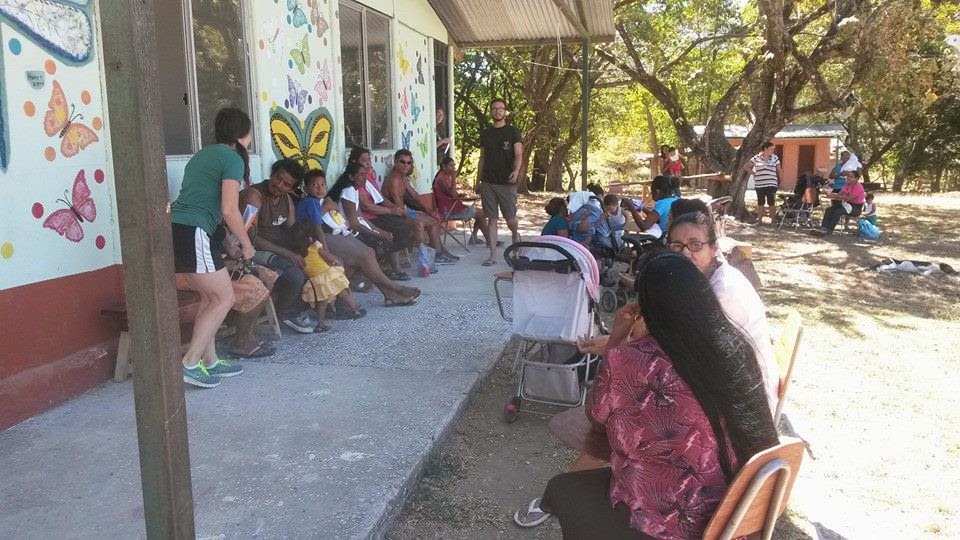


Day 2-3: San Antonio


Day 4: Bocana


Misc:
Misc:
 |
| Home-made posters for our charlas! |
 |
| "Libre soy...!" -Spanish Frozen, except it's 80 degrees |
 |
| View from Puntarenas |
 |
| Team Costa Rica '15 :) |
Until next time, Pura Vida!
Serena, Sara, Joyce, Jen, Angie
NRE and M+ (Mt.) Nuusu
 |
| Us in our cabin at Nile River Explorer |
 |
| Early morning shot of the Nile river |
 |
| Grade 6 rapids was too dangerous for us. We had to walk around the rapid to continue the 2nd leg of our Nile adventure. |
 |
| Us on our raft after the first rapid. |
 |
| Looking at Mt. Nuusu from further away. Does not look that bad... or so we thought |
 |
| It is a steep climb up Mt. Nuusu. This is I started to regret climbing this mountain. |
 |
| Feeling on top of the world! Our photoshoot after making the summit. |
 | |
|
 |
| Group selfie on top of Nuusu. We made it! |
Subscribe to:
Posts (Atom)