OVERVIEW
Thank you so much for taking time to look at our blog! We are a group of medical students who are passionate about training in underserved areas. This January and February, we are in Peru, Uganda, India, and Costa Rica internationally as well as locally in Flint and Lansing completing volunteer service, rotating in hospitals and clinics, and learning about international medicine and local underserved health care. We appreciate any time you take to read our reflections and any donations you might offer.
Please click the “Donate” link on the side for more details on how to give directly to these communities.
Showing posts with label Costa Rica. Show all posts
Thursday, January 21
A Very Delayed Week 1!
¡Hola de Costa Rica! Amanda and Andrea did a wonderful job sharing some of our most meaningful activities during our first week. Im going to try to give a close-up look at our clinic that we travel to in the city of Alajuelita. During our first week we were able to get acquainted with our host families and the routine of the clinic.
The main reception area where we check in patients.
Patient waiting area
Our main volunteer area
Our roles for the day, where we get to alternate each day. WR= waiting room, EX R= Exam room, Pharm= Pharmacy, SK= Soup Kitchen
The clinic is integrated into the community of the small town of Alajuelita due to its high concentration of Nicaraguan immigrants. The immigrant situation of Nicaraguans is interesting because they are considered "illegal" yet they are accepted to contribute to society through construction jobs, waste management and other jobs less likely to be in demand among Costa Ricans. Despite their contribution to society, they are not able to purchase Costa Riccan social health insurance and therefore cannot obtain routine healthcare from various E.B.A.I.S. centers or Equipos Básicos de Atención Integral en Salud which serve as first-line health centers.
We see many women and children as well as teenage and adult males. The doctor provides acute care for non-emergent cases as well as chronic disease management. The clinic helps with managing chronic conditions by giving them a starter regimen for their needed medications as well as plenty of patient education.
I really enjoyed being a part of a few child psychology sessions with the clinic Psychologist, Tatiana. The conditions that are endured by families can cause young children to find unhealthy and dangerous coping strategies, and it gives me hope that starting regular sessions would improve their coping skills now as well as later during their adult years.
Looking forward to meeting more people of Alajuelita and being a part of FIMRC's Proyecto Alajuelita!
-Huda
Sunday, January 17
Costa Rica - Weekend Update
After a wonderful first week in Clinic, the #treschicasinrica were able to have some fun-- we headed to the Arenal Volcano as a part of a tour package that included travel, two meals, and some time in the relaxing natural hot springs that are warmed by the heat from the volcano. Along the way, on the three hour journey to La Fortuna, the district where the volcano is, our wonderful tour guide Edgardo pointed out beautiful landmarks and educated us on the rich history of Costa Rica.
One of the most interesting things about Costa Rica is that it is such melting pot of culture. About 9% of the population consists of people born in Nicaragua, escaping the circumstances of their country. They are the largest ethnic group that our clinic serves outside of Costa Rican locals. Because many of them are undocumented citizens, they are not eligible for the social insurance, and must pay out of pocket for healthcare costs, or come to clinics like ours. However, their children are still eligible to go to schools here; not only are they eligible, but it is mandatory; parents who do not send their students to school (Nicaraguans and Costa Ricans alike), may face a fine or worse consequences.
Huda & I with two of our fellow FIMRC volunteers, Courtney & Sabrina at Volcan Arenal
In addition to citizens from other countries in Latin America, the Caribbean (east) coast of the country is home to a large percentage of citizens of Jamaican descent that migrated decades ago for better work opportunities. As our tour guide put it, Costa Ricans welcome other cultures as their influence as far as food, and music only serves to enhance Costa Rican culture!
Volcan Arenal, which is active but has not erupted since December 2010.
Some of the hot springs we bathed in at The Springs resort near Arenal
We will update with more of our service projects in the coming week!
Pura Vida!
Amanda
Friday, January 15
I think I can safely say that all three of us girls feel extremely happy to be here and lucky to have this opportunity. A week has already passed and so much has happened that it's hard know where to start. I'll give you a quick overview of the week from my perspective!
Saturday: Our arrival was a little complicated. Between the 3 of us we brought 6 bags full of medical supplies (each weighing 30-50 lbs), our own personal suitcases and backpacks. This made for an interesting trip through Customs when landing in Costa Rica.
| 2 of the 6 bags of medical supplies we packed and traveled with, they were up to 50 lbs! Thank you Donors! |
| Amanda, wondering how we managed to carry all 6 bags through both airports, customs, and have them arrive safely at the clinic. |
![]() |
| The beach at Antonio Manuel National Park. |
![]() |
| One of the many monkeys we saw along our hike to the beach. |
| My breakfast: egg scramble with ham and cheese, tortillas with white cheese, grapes, orange juice, and coffee. This was a lot of food, but breakfast is the biggest meal of the day here! |
Saturday, February 28
Ya Vengo!
Hola! As we wrapped up our last week in the FIMRC Alajuelita site in Costa Rica, we wanted to give you all an update on what we’ve been doing here!
Over the last week, we've been working on a “proyecto” (project) that we created to help improve the management of four major chronic illnesses that is commonly seen in the clinic such as diabetes, hypertension, obesity and asthma. Our group was asked to develop a plan during which we would produce a volunteer handbook that would help guide future volunteers in managing these illnesses when they come through the door.
For each of the chronic illnesses, we provided basic disease pathophysiology and specific socio-cultural-economic factors that are unique to the patient population here in Alajuelita that further complicates chronic disease management that goes beyond access to resources and medical attention. Next, we created step-by-step instructions on how patients with know history of chronic disease or demonstrate risk factors that would indicate screening and identify scenarios in which the physician or clinical staff should be notified emergently i.e. a child struggling to talk in full sentences during an acute asthma exacerbation or an adult having a blood pressure above 180/110. Our goals for these step-by-step instructions is to help streamline patient check in, provide appropriate medical care (urgent in certain cases) and allow time for health promotion and education. This leads us to the other component of our project, and arguably the most important component: health education and disease prevention. Through health education and empowering patients to take ownership of their own medical care, we hope that this would translate into creating long lasting change in people’s lifestyle habits, behaviors that would ultimately lead to better physical and mental well being.

Our completed binder!
Our focus for health education was primarily based upon providing basic medical knowledge that would be comprehensible at the population's general level of education (often is limited to grade school), discuss about risk factors for developing these chronic illnesses (tailoring these to the environmental/social/cultural practices that may contribute as a risk). We also wanted to focus on the importance of disease prevention and provide patients with tangible ways to prevent or control their chronic illnesses.
This portion actually required a lot of thought and insight into the living circumstances of the patients that we see in clinic. Having lived and worked in this community for an extended period of time, we gained an understanding of the limitations of treatment of these diseases necessary to give realistic advice and guidance. While we can argue that hypertension is shown to be most effective controlled by at least 2 anti-hypertensives, the reality is within our clinic that is situated in the slums of Alajuelita is that this treatment method is close to impossible to sustain over time due to limited resources. Instead, we tried tailored our treatment through non-pharmacological methods such as encouraging a low sodium high fruits and vegetable diet, 20-30 min of exercise on most days of the week, weight control etc. As this is our last week in Costa Rica, we also started brainstorming ideas for how to best disseminate health education, through activities that would cater to the local community. We discussed about hosting cooking classes during which patients can swap recipes and learn about healthy eating, exercise classes with yoga or simple exercise that patients can replicate at home or going into the schools to talk about asthma and incorporate the use of games and interactive workbooks. Our hope is that future volunteers can use this binder to identify patients with chronic diseases and use the educational materials that we made to educate patients on their disease, prevention, and treatment that is catered to unique challenges this population faces. We hope that the program is sustainable and will eventually help patients better control their chronic diseases in ways that make sense to them. We are planning to work with FIMRC to send some of this information to volunteers before they arrive in Costa Rica so they can jump right in and educate patients on day 1 and perhaps even use our posters and other educational materials to hold a charla (lecture) or a support group meeting!

Our patient learning about diabetes complications from Diego, diabetes man!

Serena giving a diabetes charla with brochures she made for future volunteers to distribute!

Too cute not to share! These kids were so interested in learning about how to use my stethoscope... he even asked me to turn around and breath so he could hear my lungs like I did to him!
For our last weekend, we were able to enjoy the beautiful coastal city of Montezuma and Santa Teresa with our adopted group member Luke and captured some of the most beautiful sunsets over the Pacific Ocean! We also visited Montezuma Falls, which consists of three sets of waterfalls emptying into freshwater swimming holes, one of which even had a rope swing!

Montezuma Falls

Playa del Carmen

Beautiful sunrise!
It has been such a pleasure to have had the opportunity to work with the clinic staff and the patients here FIMRC Alajuelita. We are grateful for the help and guidance that we received from Tatiana, Dayon and Dr. Natalia during our time here. It has truly been a once in a lifetime experience and we have all learned so much about the practice of medicine in Costa Rica, international medicine, public health, and the beautiful language, culture and people of Costa Rica. Thank you so much for all your support and for following our blog!! Muchas Gracias y Ciao from Costa Rica Team 2015 “Las Chicas”!! Ya Vengo, which means be back soon!
Over the last week, we've been working on a “proyecto” (project) that we created to help improve the management of four major chronic illnesses that is commonly seen in the clinic such as diabetes, hypertension, obesity and asthma. Our group was asked to develop a plan during which we would produce a volunteer handbook that would help guide future volunteers in managing these illnesses when they come through the door.
For each of the chronic illnesses, we provided basic disease pathophysiology and specific socio-cultural-economic factors that are unique to the patient population here in Alajuelita that further complicates chronic disease management that goes beyond access to resources and medical attention. Next, we created step-by-step instructions on how patients with know history of chronic disease or demonstrate risk factors that would indicate screening and identify scenarios in which the physician or clinical staff should be notified emergently i.e. a child struggling to talk in full sentences during an acute asthma exacerbation or an adult having a blood pressure above 180/110. Our goals for these step-by-step instructions is to help streamline patient check in, provide appropriate medical care (urgent in certain cases) and allow time for health promotion and education. This leads us to the other component of our project, and arguably the most important component: health education and disease prevention. Through health education and empowering patients to take ownership of their own medical care, we hope that this would translate into creating long lasting change in people’s lifestyle habits, behaviors that would ultimately lead to better physical and mental well being.
Our completed binder!
Our focus for health education was primarily based upon providing basic medical knowledge that would be comprehensible at the population's general level of education (often is limited to grade school), discuss about risk factors for developing these chronic illnesses (tailoring these to the environmental/social/cultural practices that may contribute as a risk). We also wanted to focus on the importance of disease prevention and provide patients with tangible ways to prevent or control their chronic illnesses.
This portion actually required a lot of thought and insight into the living circumstances of the patients that we see in clinic. Having lived and worked in this community for an extended period of time, we gained an understanding of the limitations of treatment of these diseases necessary to give realistic advice and guidance. While we can argue that hypertension is shown to be most effective controlled by at least 2 anti-hypertensives, the reality is within our clinic that is situated in the slums of Alajuelita is that this treatment method is close to impossible to sustain over time due to limited resources. Instead, we tried tailored our treatment through non-pharmacological methods such as encouraging a low sodium high fruits and vegetable diet, 20-30 min of exercise on most days of the week, weight control etc. As this is our last week in Costa Rica, we also started brainstorming ideas for how to best disseminate health education, through activities that would cater to the local community. We discussed about hosting cooking classes during which patients can swap recipes and learn about healthy eating, exercise classes with yoga or simple exercise that patients can replicate at home or going into the schools to talk about asthma and incorporate the use of games and interactive workbooks. Our hope is that future volunteers can use this binder to identify patients with chronic diseases and use the educational materials that we made to educate patients on their disease, prevention, and treatment that is catered to unique challenges this population faces. We hope that the program is sustainable and will eventually help patients better control their chronic diseases in ways that make sense to them. We are planning to work with FIMRC to send some of this information to volunteers before they arrive in Costa Rica so they can jump right in and educate patients on day 1 and perhaps even use our posters and other educational materials to hold a charla (lecture) or a support group meeting!
Our patient learning about diabetes complications from Diego, diabetes man!
Serena giving a diabetes charla with brochures she made for future volunteers to distribute!
Too cute not to share! These kids were so interested in learning about how to use my stethoscope... he even asked me to turn around and breath so he could hear my lungs like I did to him!
For our last weekend, we were able to enjoy the beautiful coastal city of Montezuma and Santa Teresa with our adopted group member Luke and captured some of the most beautiful sunsets over the Pacific Ocean! We also visited Montezuma Falls, which consists of three sets of waterfalls emptying into freshwater swimming holes, one of which even had a rope swing!
Montezuma Falls
Playa del Carmen
Beautiful sunrise!
It has been such a pleasure to have had the opportunity to work with the clinic staff and the patients here FIMRC Alajuelita. We are grateful for the help and guidance that we received from Tatiana, Dayon and Dr. Natalia during our time here. It has truly been a once in a lifetime experience and we have all learned so much about the practice of medicine in Costa Rica, international medicine, public health, and the beautiful language, culture and people of Costa Rica. Thank you so much for all your support and for following our blog!! Muchas Gracias y Ciao from Costa Rica Team 2015 “Las Chicas”!! Ya Vengo, which means be back soon!
Monday, February 16
A B C, it's easy as 1 2 3
In Alajuelita we have spent the first few weeks getting to know the population. We have been exposed the living conditions, experienced the typical food, and chronicled the entire clinic population with a special emphasis on those with chronic diseases. Here, many people believe that their chronic illness can be cured with a simple medication. And many of the medications given for chronic diseases are shared amongst the entire family regardless of whether each individual actually suffers from the disease. This has led us to focus our project on ways to improve their understanding of chronic diseases. The project specifically targets some of the most common illnesses: asthma, diabetes, hypertension, and obesity. Because the majority of the population lacks insurance, the people have very minimal access to healthcare, particularly medications. Our free clinic serves to provide services to these individuals, however the amount of available medications is never sufficient. This makes treating diabetes and hypertension very challenging as some of the simple solutions in the United States such as insulin, or meds for hypertension impossible. Thus we have had to focus our efforts elsewhere and begin with education.
This is also true when it comes to treating asthma. During our pediatric rotation in the US, we grew very accustomed to treating asthma. When a child came in with pre-existing asthma, we assessed how well it was controlled by asking about certain symptoms, like waking up at night coughing, frequency of rescue inhaler use, and the amount that asthma is interfering with daily life. Once that was assessed, we made recommendations to either continue the same regime or add more medications. Medications almost always included a control medication that was to be taken everyday and a rescue inhaler for emergencies. Here, I have seen only a handful of patients with inhalers. The rest of the population cannot afford the inhaler or the medication for the inhaler. As a result, teaching parents and children about correct inhaler use is almost obsolete except for the few that have them. In addition, in the US, we use an asthma action plan. This plan outlines what to do if a child is having certain symptoms ranging from none to an asthma attack that requires immediate medical attention. However, our population neither has the medication nor the education necessary to follow such a protocol. Indeed, children come to the clinic for unnecessary visits due to this lack of education. Our goal is to use our brochures and posters to give this education and enact the plan to prevent unnecessary visits and time away from school. Finally, in the US, prevention is focused on making sure no one in the home smokes around the child, both in the home and car. Here, however, asthma triggers are everywhere. Since most children live in slums, floors are commonly dirt and cockroaches are abundant. Dist from dirt roads hangs in the air constantly. Therefore, we've had to think outside the box and recommend ways to keep dust down, such as wetting floors, hanging damp bedsheets around the child's bed at night, and sweeping floors multiple times a day. Even with education and interventions, controlling asthma in this environment is difficult.


Our asthma posters!
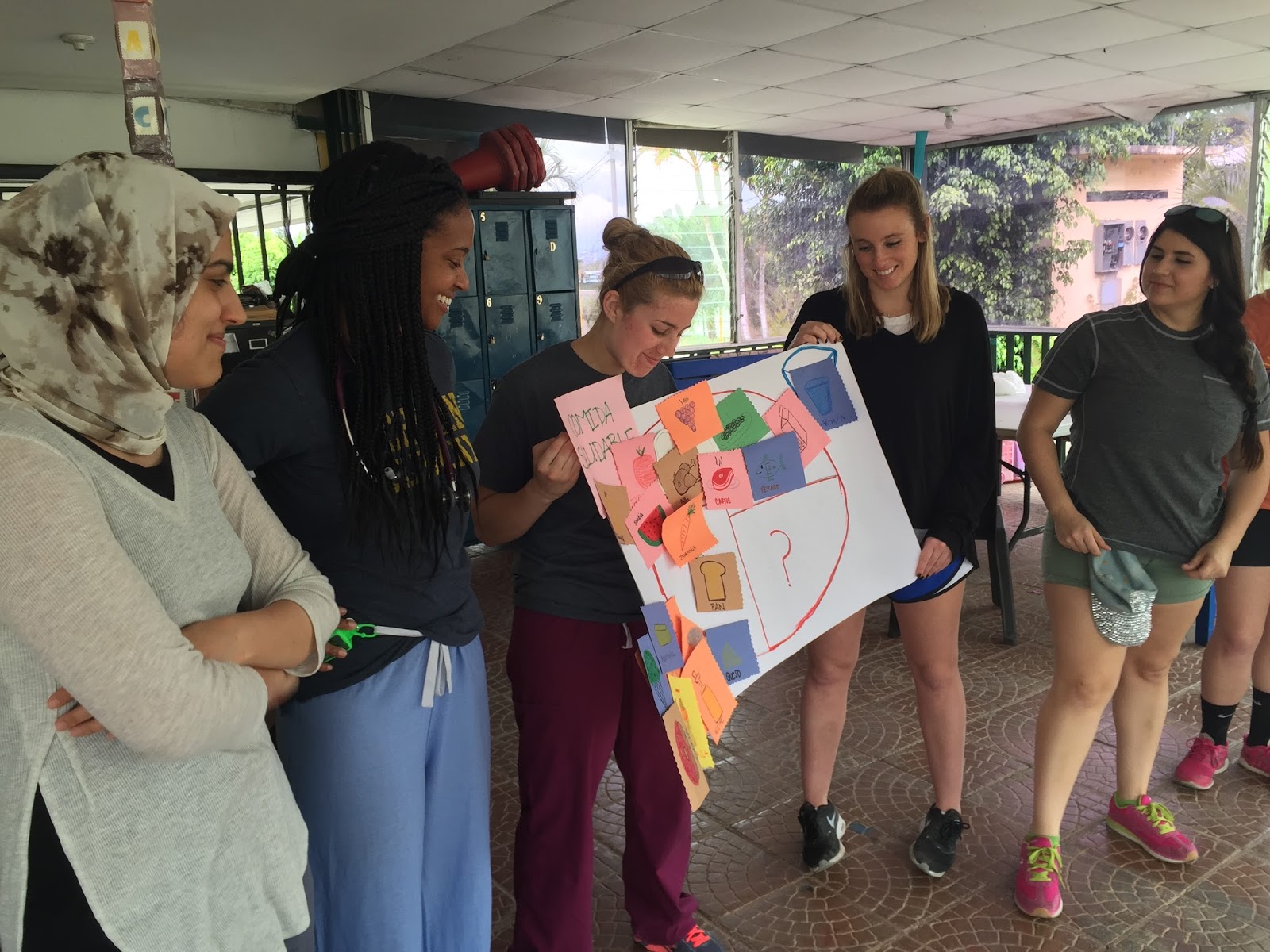
We have begun developing educational “charlas” (interactive lectures) to help patients understand these common illnesses. This hopefully will alleviate the minimal time the doctor has to run through basic guidelines for management while simultaneously focusing on patient understanding. Furthermore it is unrealistic to simply say “eat healthy” here. Much of the food includes heavy doses of vegetable oil and salt. So while a healthy diet is a component for hypertension, diabetes, and obesity we have again had to reframe our mindset and step into the patient’s perspective to develop reasonable guidelines. We had the opportunity to go to a local soup kitchen last week and give 2 charlas, 1 on brushing teeth and the other on hand washing. The kids were so interactive and excited! However, we learned that in order to give these charlas, repetition and participation is key. Instead of just holding up a poster and reading it, we played games and formed everything in a question to get the kids to participate and hear the information in various forms. Serena held her own workshop on using bead necklaces for natural family planning that went very well too! We are definitely keeping wgat we learned from these experiences in mind while we form our scripts for future volunteers!
One of our main goals is to make these efforts sustainable, so that future volunteers who are not as medically mindful can relay this message as well. Our interactive seminars all include a concise script easy to read for volunteers and in basic language for the patients. More importantly, our aim is to empower patients in the population who are willing to share their own experiences. We recognize that lecturing repetitively is rarely useful. Thus, we hope to identify certain patients in the population with personal experiences of these diseases, as well as ask them to lead certain workshops involving demonstrations of exercises because we know this will be a much more powerful motivator.
We have been so lucky to work with Dr. Natalia who not only teaches us about the social and cultural context within which we are working, but also allows us autonomy to interview the patients and do physical exams. We've had so much fun working with her, and have learned a lot!

Physical exam!

Jen training our new secretary.

Serena interviewing a clinic patient.
On another note, we've been very fortunate to be able to enjoy the beautiful landscape of Costa Rica. A couple of weekends ago we went to Volcan Arenal with another volunteer, Luke. Last weekend, we went to Monteverde, a city in the mountains, and hiked through a cloud forest. Here are some photos!
Her majesty volcan arenal
The sun is setting on our trip here, but we've all learned so much. We are excited to wrap up our project in the coming days and hopefully make understanding, preventing, and treating chronic illnesses a little easier both for the clinic and its patients. Until then, Pura Vida!

Sunday, February 8
A day with the psychologist
**All names have been changed.
Ana was born in Mexico, and at the age of 13 was "sold" by her parents to be married to a 42 year old man. A year later she was a new mother, and her husband, bored and uninterested in children, abandoned her. She moved back to live on her parents' farm. After a few years, a drought came, and nearly devastated their crops. A child in a family of 14, many of her older brothers came home to help save the family farm. Her eldest brother lived several miles away, and Ana would often spend days or weeks at a time at his house to help with the crops. One day, while at his house, Ana's brother attacked her. He locked her in his house, and he abused and raped her at his will. Because his house was far from her mothers', it was not unusual for her to not come home for long periods of time, so no one came to look for her. Her captivity lasted for weeks, until one day she was able to escape. When she arrived home, she discovered that her mother had suffered a heart attack and was in the hospital. She told no one about what had happened to her.
Ana visited her mother in the hospital everyday. There she met Pablo, a patient recovering from weeks of captivity and torture by a Mexican gang. Ana and Pablo became friends and stayed in touch. When Ana moved out her mother's house into her own, she offered Pablo a room for rent. They soon became lovers.
By this time, Ana's daughter was 10, and she had a son, 8. One day, Pablo overheard the children fighting and blaming each other. Ana and Pablo approached the children about the conversation, and were horrified at what they heard. While they were at work everyday, Ana's mother, the children's grandmother, took the children to Ana's brothers' house each day, where Ana's daughter was being raped daily. Pablo insisted they go to the police. They brought Ana's daughter to the hospital, and tried to file a police report. However, Ana's brothers were all part of the The Zetas, a large and powerful Mexican gang that has corrupted many police forces throughout the country, including theirs. The police informed her brothers of the "lies" and "defamation" that Ana and Pablo were supposedly trying to spread about them, and threatened to kill them all. Ana and Pablo decided to flee, but the gang followed them to each city that they fled to. Ultimately, they decided that the only way to survive was to disappear. And so they left the country in the middle of the night, telling no one where they were going.
They made it through Mexico and Guatemala, finding bits of work along the way, but in El Salvador encountered more trouble. They were robbed of all their money. A group of men attempted to abduct their daughter. They were ultimately able to find refuge in a church organization, who gave them enough money to get to Costa Rica.
Ana, Pablo, and their children, now 12 and 14, are living in Alajuelita, where our clinic is, trying to find jobs and start over. After years of stints of broken education, their children are finally enrolled in school. But while safe, they are far from recovered. As the psychologist as the clinic put it, they are still in survival mode. They have spent so much time living in fear and constant motion that they don't even know what "normal" is anymore. It is tough to even scrape the surface of the emotions they may have, because there are so many experiences and feelings buried deep down, untouched.
This family is just one of the many impoverished or immigrant families that we see everyday in the FIMRC clinic. They come from unimaginable backgrounds, and have faced tremendous hardships along the way. Families that have been ripped apart and suffered terribly. For many, this is the only place they have been able to seek work, education, medical care, mental health services, and a chance at a better future for their children. It is both challenging and rewarding to have this opportunity to work with them.
Ana was born in Mexico, and at the age of 13 was "sold" by her parents to be married to a 42 year old man. A year later she was a new mother, and her husband, bored and uninterested in children, abandoned her. She moved back to live on her parents' farm. After a few years, a drought came, and nearly devastated their crops. A child in a family of 14, many of her older brothers came home to help save the family farm. Her eldest brother lived several miles away, and Ana would often spend days or weeks at a time at his house to help with the crops. One day, while at his house, Ana's brother attacked her. He locked her in his house, and he abused and raped her at his will. Because his house was far from her mothers', it was not unusual for her to not come home for long periods of time, so no one came to look for her. Her captivity lasted for weeks, until one day she was able to escape. When she arrived home, she discovered that her mother had suffered a heart attack and was in the hospital. She told no one about what had happened to her.
Ana visited her mother in the hospital everyday. There she met Pablo, a patient recovering from weeks of captivity and torture by a Mexican gang. Ana and Pablo became friends and stayed in touch. When Ana moved out her mother's house into her own, she offered Pablo a room for rent. They soon became lovers.
By this time, Ana's daughter was 10, and she had a son, 8. One day, Pablo overheard the children fighting and blaming each other. Ana and Pablo approached the children about the conversation, and were horrified at what they heard. While they were at work everyday, Ana's mother, the children's grandmother, took the children to Ana's brothers' house each day, where Ana's daughter was being raped daily. Pablo insisted they go to the police. They brought Ana's daughter to the hospital, and tried to file a police report. However, Ana's brothers were all part of the The Zetas, a large and powerful Mexican gang that has corrupted many police forces throughout the country, including theirs. The police informed her brothers of the "lies" and "defamation" that Ana and Pablo were supposedly trying to spread about them, and threatened to kill them all. Ana and Pablo decided to flee, but the gang followed them to each city that they fled to. Ultimately, they decided that the only way to survive was to disappear. And so they left the country in the middle of the night, telling no one where they were going.
They made it through Mexico and Guatemala, finding bits of work along the way, but in El Salvador encountered more trouble. They were robbed of all their money. A group of men attempted to abduct their daughter. They were ultimately able to find refuge in a church organization, who gave them enough money to get to Costa Rica.
Ana, Pablo, and their children, now 12 and 14, are living in Alajuelita, where our clinic is, trying to find jobs and start over. After years of stints of broken education, their children are finally enrolled in school. But while safe, they are far from recovered. As the psychologist as the clinic put it, they are still in survival mode. They have spent so much time living in fear and constant motion that they don't even know what "normal" is anymore. It is tough to even scrape the surface of the emotions they may have, because there are so many experiences and feelings buried deep down, untouched.
This family is just one of the many impoverished or immigrant families that we see everyday in the FIMRC clinic. They come from unimaginable backgrounds, and have faced tremendous hardships along the way. Families that have been ripped apart and suffered terribly. For many, this is the only place they have been able to seek work, education, medical care, mental health services, and a chance at a better future for their children. It is both challenging and rewarding to have this opportunity to work with them.
Monday, February 2
Adventures in la Isla Chira
(Apologies for the font discrepancies... having technical difficulties)
On to la Isla Chira. Population, 3000.
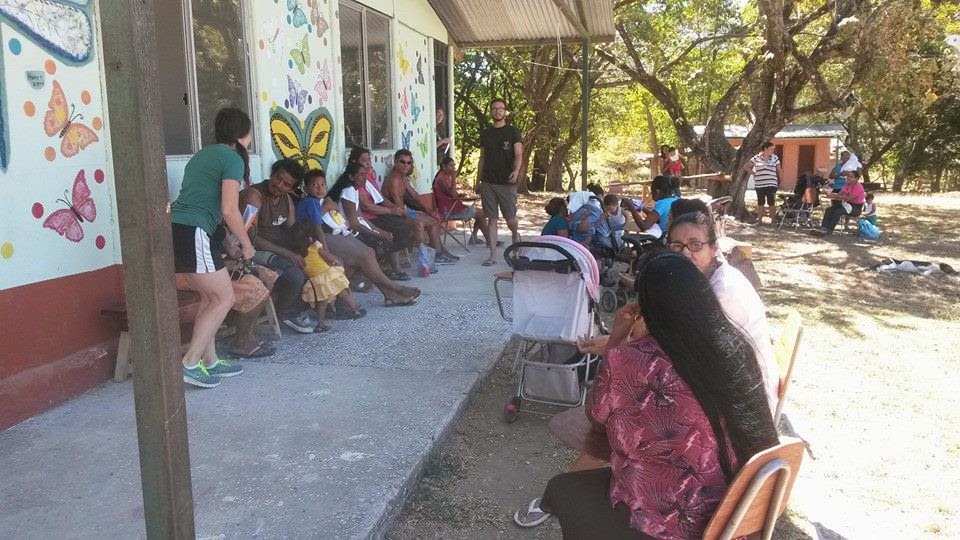
The five of us, Dra Natalia and her boyfriend Dr Pablo, Tatiana and her four-year old daughter Isabela, Dayan, and another volunteer Luke, ventured on a lancha (boat) along the Gulf of Nicoya (an inlet of the Pacific) towards Costa Rica's second largest island populated by three indigenous villages. We will be running a mobile clinic in three different communities on the island this week, as Chira only has one out-of-town doctor that comes to work at their local clinic 1-2 times a week. The nearest hospital is in the city of Puntarenas, which is accessible only by boat. Access and cost, needless to say, are big issues.
We learn very quickly to accept the fact that there will be a constant exterior layer of sticky salty sweat mixed with dried sunscreen and greasy DEET permeating our bodies. Suffice to say, it isn't the sexiest moment of our lives.
We dove right in. Tati assigned each of us patients, grouping them by families. Many arrived as early as 6am to wait for us. On average, each of us saw 8-12 patients from start to finish. We were their receptionist; their nurse; their doctor; their pharmacist. After presenting each case to Drs Natalia or Pablo, forming a diagnosis and plan, and educating / counseling our patients, we dose and fill their medications (thank you donors!) and explain to them the instructions before sending them on their way.
217 patients later... many untreated skin infections (some that were clearly septic), untreated urinary tract infections (many in young kids, some which have spread to the kidneys), sugars ranging from 52 to 508, misdiagnosed hyperthyroidism which was actually hypothyroidism, lots and lots of back / leg / neck pain, neglected mental illnesses, parasites, gastritis, malnutrition...you name it. Many of these patients have a low level of education and health literacy, coupled with lack of access and issues with cost (Costa Rican prices tend to be more steep than in the U.S.) = lots of end stage preventable conditions, infections that have spread, and general lack of understanding about their health conditions.
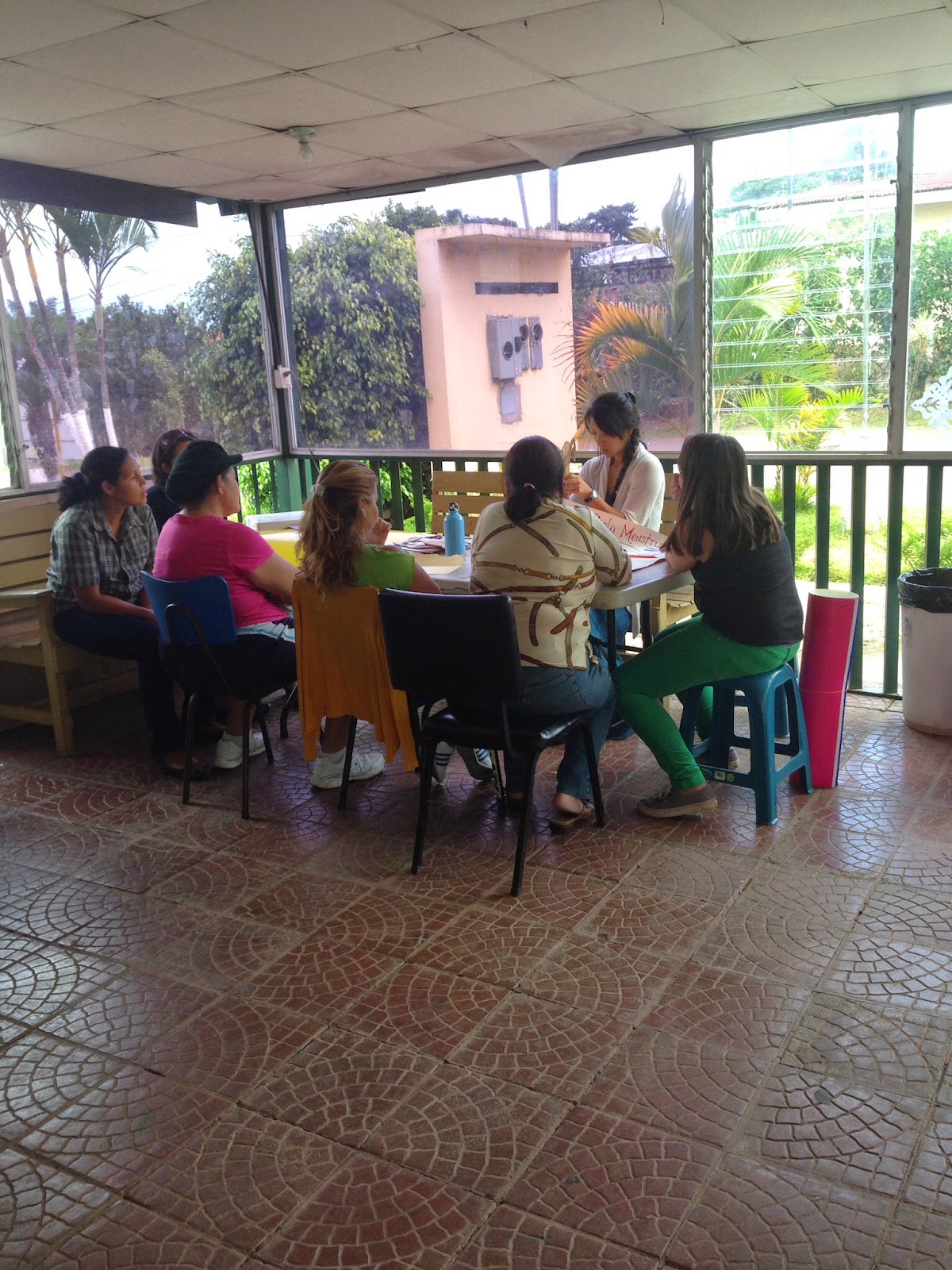
On the last day, Angie and I gave charlas on Hand Washing / Dental Hygiene for the kids and the Female Reproductive System / Menstrual Cycle with Cycle Beads, respectively. Both were very well received. After four days of packing/repacking the meds, setting up and running the clinic, we grew quite efficient and confident with our skills. We adapted quickly to our surroundings, worked together as a team, looked out for each other, avoided drama, built cultural bridges to minimize language barriers, constantly thought on our feet and made adjustments as needed, and played on our respective strengths. Overall, it has been a fun, hot, memorable, and informative cultural learning experience. We wish there was more continuity with the patients we saw, but we at least feel solaced by the fact that it was care and education that they would not have otherwise received. The relationships we developed, as short-lived as they may have been, were real. Those are the intangible moments we will remember and take home with us, on both sides of the continent.Here are some highlights from our week in pictorial form:
Day 1: Palito and Montero
Subscribe to:
Posts (Atom)