OVERVIEW

Thank you so much for taking time to look at our blog! We are a group of medical students who are passionate about training in underserved areas. This January and February, we are in Peru, Uganda, India, and Costa Rica internationally as well as locally in Flint and Lansing completing volunteer service, rotating in hospitals and clinics, and learning about international medicine and local underserved health care. We appreciate any time you take to read our reflections and any donations you might offer.

Please click the “Donate” link on the side for more details on how to give directly to these communities.


Monday, January 13

Nicaragua!

Hola desde Nicaragua! Jenny, Nicole, Caitie and Rachel here. After a night stay in a lively, beautiful town, Granada, we arrived at our site Sunday morning to get acquainted with our new neighborhood in Limon II and settle in to our house. Our little casita is in the back of a complex bordering a small rainforest. In our two days here, we have seen a small scorpion, a scorpion/spider hybrid, grasshopper and geko (all our in our house) and a gang of howler monkeys showed up in the early morning at the rainforest behind our hosue, waking us up with their screams.

Our casita for the next 7 weeks

The complex is nestled on a small dirt road in Limon II, a small community in the state of Rivas, Nicaragua. The complex is owned by a couple from Florida who are coordinating our living arrangements. We eat breakfast and some dinner in a common area where a local Nicaraguan cook prepares food. The beach, Playa Santana is a short walk down the road from where we are staying. It is a gorgeous beach on the Pacific Ocean and is relatively remote.

La playa Santana near our house
Today was our first day at the clinic. While here will be working at the FIMRC clinic (the organization we are here with), the Health Post clinic (a local public clinic) and at the hospital in Rivas, the nearest large city. We will also be doing community outreach projects such as diabetes home visits and prenatal home visits.

The FIMRC clinic site

The FIMRC clinic is housed in a public building that was donated to FIMRC by the community. There are latrines out back for restrooms and a jug of clean water is kept inside the clinic. A few giant pigs seem to hang out near the back of the property. All of the walls inside were painted by previous FIMRC volunteers with an emphasis on pediatric topics such as colors and animal names. The clinic is staffed by a Nicaraguan doctor, a Pediatric Surgeon, who sees general pediatric concerns in the small community a few days a week.

Inside the FIMRC clinic, the small Farmacia on the left and the Consultas room on the right. 
Today we unloaded our donations that we brought in the morning and saw patients with the doctor in the afternoon. We already saw the Pediatric Tylenol and Hydrocortisone creams we brought get put to good use as we sent patients home with their necessary medications.

The procedure room in the Health Post clinic
Tomorrow we are working in the Health Post clinic (just next door to the FIMRC clinic) with a general practice physician. We will see adults and kids there but we are told that there will be a lot of pediatrics and obstetrics in the area. 


That's it for now. Adios de Nicaragua!

Sunday, January 12

Peru Travel Days - January 12, 2012

Peru Team - https://www.dropbox.com/s/7c0nnv2ftbxqxad/Jan%2012.pdf
MSU College of Human Medicine (CHM) & School of Public Health (SPH)
Chris, Danielle, John C, Phil, Laurie and Beth, David, Emily

This is only a snippet of the full blog entry! 
Please see the full entry with more pictures at https://www.dropbox.com/s/7c0nnv2ftbxqxad/Jan%2012.pdf

Chris writing here, and I think I can speak for the rest when I say, “we are excited!!!!” We completed a week of orientation in Flint with Dr. Schnuth and successfully collected, packed, and organized our donations. We are so grateful to those who have supported us in this journey, and we were so glad to finally make it to Peru for our Leadership in Medicine for the Underserved’s International Health Elective!

Want to know more about our journey thus far? Click here!

Please see the full entry with many more pictures at https://www.dropbox.com/s/7c0nnv2ftbxqxad/Jan%2012.pdf

Sunday, December 29

Chris - Happy New Year & Peru Supply List

Happy New Year (Almost!) from Germany! 
I am happy to spend the holidays and new year celebrating at my parents' house along with my sister Betsy and her family in my childhood town of Kandern, Germany. Here is a photo of some of us storming the Sausenberg Castle yesterday. 


I am personally excited for the upcoming year of 2014 for a number of reasons including international experiences, graduation from medical school in May, and starting pediatric residency this summer while the World Cup plays in Brazil!

Speaking of the World, it is time to give an update on how one of the international electives planning is coming along.


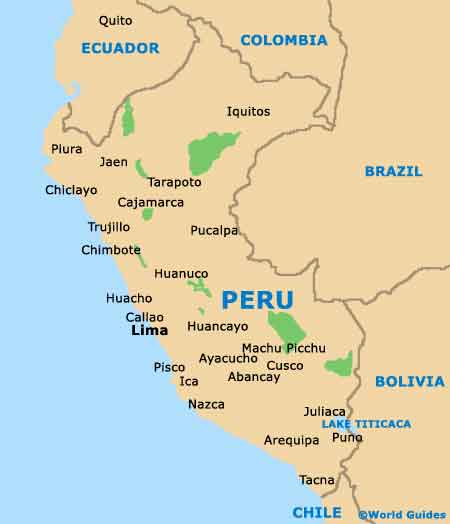
Huancayo, Peru
I just received an email from Christine Record, MPH the Field Operations Manager for the Foundation for International Medical Relief of Children in Peru. She gave us the down and dirty about airport pickup on January 11th, and which hostel we will visit before taking the bus out to Huancayo. I am not sure about the living arrangements in Huancayo and will be happy no matter the placement, but I am hoping for a host family! I think we will find out soon. My personal goal is to speak Spanish to complete medical interviews competently before residency begins this summer.

Her email also lists more supplies needed in Huancayo. These include children's vitamins, prenatal vitamins, school supplies, and surgical kits (masks, booties, hair nets) and N95 masks which protect against tuberculosis and other infectious diseases. 

If you had medical needs, would you accept donations? If so, please consider making a donation to some of the people in Huancayo, Peru at http://lmu.msufame.msu.edu/donate.php.

Well that's all for this update. More to come soon!

Signing off,
Chris

Pop quiz - can you find Huancayo on the map? 
Hint: At roughly 10,000 feet high it is in the mountains of Peru.


Monday, November 25

Working in Flint Public Schools


     Working as an uninformed volunteer for a public school system in a Michigan city can be a little like a game of roulette.  Back before medical school began, I did some volunteer work in a public school for pregnant teenagers in Detroit.  Not long after my time there, the school was first closed and later chartered.  Since then other schools I've worked in have been closed, mostly in the Detroit area.  It is commonplace in Detroit that these institutions, mighty in the eyes of thousands before that walked through its doors, are regularly threatened into becoming scrap metal havens.  I knew when beginning my work at Bryant Elementary School that Flint is no different.  There was always a good chance we were on borrowed time and that the feeling of futility could once again surface.
 The work seemed simple enough- we would develop relationships with teachers, prepare science or health related curriculum on our own time, and have a fixed time once a week to work with the children.  Despite being busy and often overworked, we became regulars at the schools.  My fellow classmates worked on spectacular curricula mostly regarding health habits reinforced with our education of basic and biologic sciences.  I at first took a different route, meeting with children that had social issues and helping to keep them interested in school.  I later helped in the classrooms with the other medical students.
I began my handful of children with a lesson on the heart.  I knew they were assigned to me because they had issues at home, but I wanted to see where their interests lay.  All claimed to love science, and attentively followed my instruction on the anatomy of the heart.  It helped that we had set a future date to actually dissect a deer heart as long as they could retain some basic information that I taught them.  The first lesson was a hit, and they all left feeling excited about our weekly time.  The next week I arrived and one of the children was missing.  Apparently he had gotten into a verbal altercation with a teacher and was suspended.  I additionally noted that one of the other boys had very dirty clothes on him that day.  He told me his family had been evicted and he was living in a one floor house with 10 other people.  It was our second lesson and the rest of the world was already crashing in, making comments, disrupting the class.
It took about four weeks after that one until we were able to dissect the heart.  By some miracle of modern technology my freezer kept the heart anatomically sound, and by some other miracle of social grace my roommates did not object to a large deer heart being kept frozen in the freezer for so long. Week after week prior to this  there would be some issue or other.  Teachers and counsellors were entrusting me with dark family secrets with the hopes that I could somehow cater my 3 hours a week of science fun towards the complex and layered issues of the childrens' lives. The futility was creeping in on me, and my respect for the teaching profession gained even more deference.
The news that Bryant would be closing came some months before the end of the school year.  All the frustration of my prior experiences came rushing back, and a part of me even felt foolish for having tried to work in an inner city school again.  I believe it is common amongst many in medicine to feel like community outreach work is frustrating in comparison to clinical work.  Like in medicine, the work takes a large quantity of time and energy, but there is the large difference that outcomes are very difficult to quantify.  I could not point to improving lab values or see a healing wound- I will likely never be able to concretely tell if these children will stay in school, have healthy relationships with their community, go into careers they wished for, or even if they enjoy coming to class just a little more.  Furthermore, how could we have impacted the children of this elementary school positively when it was clear other forces were unstoppable?  Their class size would enlarge, many of the dedicated teachers would be let go, and important resources to their learning would be further rationed and diluted.  I was confused and could not tell how my presence would make any difference.
“DR. K!!!” I turned around to see the student who had been evicted running towards me.  It had been a month or so after knowledge of the future closing.  He was quite bright but not very confident about his future- something his grades showed.  I loved working with him because he had many questions, but was feeling skeptical to how our meeting time would really change the facts of his home situation.  He told me he had been talking to his aunt, a nurse at the hospital I work at.  He told her everything about the deer heart, explaining what he knew about blood and how it is pumped.  His aunt apparently showed him some more short lessons about anatomy using their dog.  He told me all of this is making him want to be an “animal doctor”.
I wish we could have stayed at that school for a longer time.  We had projects underway to assess the needs of that elementary school, and hopes in the future to conduct community directed research that could benefit everyone longterm.  The school closing was a major blow to what could have been an effective longitudinal relationship focused on public health.  After all, we are medical people and that is what we do best.  Our talents are employed wonderfully through classes and tutoring, but we do not compare to the amazing teachers that have dedicated their lives to it.   Still, I know that LMU will be in the community a long time and will once again work on developing these relationships with at need groups this year.
In Bryant,  as exemplified by the future veterinarian, I believe our role may have been more about planting seeds.  I think we worked hard to spread ideas, sometimes about science through science projects, at other times about health through classroom activities, and always about future possibilities by our own experiences of being physicians in training.  The circumstances that shortened our time there is exactly the type of negative influence we are trying to overcome with our work.  The hope of the children I met who continue to persevere despite hardship necessitates that I continue to work in community outreach.  I think that the feeling of hope pervades the LMU community, where hurdles like this only ask for reflection and improvement.  Quitting is not an option. 

Tuesday, November 19

Monika's Reflections of Flint

Flint, MI 2013

What is a reflection but the picture I see in the puddles? The picture is filled, edge-to-edge; I am there, looking back at myself. Around me is the background: the living city, the events happening around me, the people on the street. The water gathers on a foundation, without which it would have washed away. I ponder Flint, and how the images that are echoed to me have changed since my way here was made.

Ask me to stand on shaking ground
my feet will falter
but I could stand firm
on peaceful earth, strong, still and good

There was a time, I have been told, when this city shone in the glory of a booming car industry, in wealth and success, and in a strong middle class. The brick was freshly laid and the sidewalks were smooth. Elaborate fountains fed off the Flint River, and new buildings boasted in their grandeur. This is not the Flint I have made my way through in the past year and half, or which has changed me. The rain falls on cracked pavements, and this is the foundation.

A few months after I had established Flint as my home, I was invited to volunteer for an enrichment center a few miles north of downtown. We spent the morning in a park next to the center, two friends and I, picking up trash that had collected over the past year. The trash consisted of many different items, which mostly fell into two broad categories: alcohol containers and fast food wrappers. So new to Flint, and not a native, I had been feeling distinctly like an outsider to the city. What was my role, and how could I really tangibly contribute? As I walked through the grass, trash bag in hand, I had the greatest sense of satisfaction. It was a rush. Here was this park, beautiful, big, full of opportunity. It was so littered, so covered in the probably years' worth of trash and abandon. All it took was picking up a vodka bottle here, a McDonald's wrapper there, and within a few hours, in my eyes at least, it was gorgeous! We spend the afternoon handing out vegetables that had been donated to the neighborhood around. The experience was a relief: not because I felt I had made any sort of major difference in anyone's life, but because I think I made a step forward in understanding Flint. The park was already there... it just needed some work.


Many months later I had a slightly different opportunity to work in the earth of Flint. Friends and I spent a few hours working to plant a community garden in a lovely old neighborhood with dusty mansions and run-down houses all around. I love the idea of a garden. It takes soil that has always been there, enriches it, uses it, and the result is nourishment for everyone around, what is not to love? Flint is poor, and much of it abandoned. I have seen scores of roofs with massive gaping holes, from flames that have licked there way through. There are so many porches, warped and bent in shapes fit only for a Dr. Seuss book. Liquor stores have supplanted grocery stores, and brush has defeated lawn. So yes, perhaps I appreciate gardening more than ever before. I think I am better able to recognize the value that is growth from a tiny seed, and my responsibility towards helping it grow. Nothing but weeds will grow if it is not planted; what a shame, if it doesn't?  

Fire in Flint

The tree is silent unless heard
resounding nothing;
moreover am I
if you aren't there for me to smile

In the shimmering puddle, filling up the image, is everything around me. This city is not Flint without the people here. They change my reflection as much as the foundation, as much as myself. They are constantly moving in and out; some spend just a second, others linger in the background, and each change what I see looking back at me. They are my background.

Bryant Elementary sits now empty and abandoned, but last year it was the scene of some of my most formative times in Flint. More Wednesdays than not, I spent the afternoons in classrooms at the school. My first drive to Bryant, I wound around and through some neighborhoods, half lost, half curious. Where did I know this landscape from? Ah, yes. Quito, Ecuador. It was a snapshot of a developing country, somehow dropped in a "developed" nation. Bars on windows and doors, slathered paint weathered by decades, dilapidated construction sites interspersed between stores and churches. So when I stood in front of my first class, and looked at each of the little faces, it was with the understanding that many of these kids came from an environment and background very, very different from my own.

With class sizes in the thirties, with children 6 and 7 years old, and without good resources, it was not easy for the teachers to teach, and it was certainly a challenge for the novice medical student. Each child played a role in shaping my experience, whether particularly challenged and acting out, or bright, eager and curious but without enough attention. Yes, this nation is one of opportunity. We all have the opportunity to fight to the top, but some of us have to fight a whole lot harder than others. These little children, they will have to fight very, very hard, and from the moment they are born. So I am surprised when others are surprised how many of these little ones will turn into adults living in worlds of crime, homelessness, substance abuse, violence or gangs. Of course! It is the exceptional child who will begin to fight tooth and nail from such a young age. In a wealthy suburb non-exceptional means he will live a normal life; in North Flint, MI this means he will more likely than not end up in jail.

In a primary care office, when we see a child who we deem not to have the same capacity as her peers to function intellectually, socially or physically in her surroundings, we call this "handicapped." I had the wonderful opportunity to volunteer for a sports physical clinic at the Elmer Knopf Learning Center a while ago, where we saw 200-300 children so that they could participate in the upcoming Special Olympics. I loved working with these kids; they were each so unique from the other, each with their own challenges, each with their own ways of communication. One child, we'll call her Anne, was especially memorable to me. She ran over to me when it was her turn, cropped blonde hair bouncing around her smiling, enthusiastic face. She wore a long, flowered dress, which showed off her passion for fashion, which she expertly gathered before plopping down in the chair in front of me. It seemed, during our brief encounter, that she was as much trying to make me feel comfortable as I was for her. She smiled and laughed loudly at every joke I made, and the compliments were flowing. Perhaps she knew what alienation was like, so she tried her absolute best to make sure no one else would feel that way. It reminded me how intuitive and bright children can be. This experience solidified my desire to work with children in the future, and for this I am so grateful.

Children who are handicapped are at such extreme disadvantage, I am so glad there are resources out there for them, even if there could always be more. Children from poverty are also at extreme disadvantage, but I am not sure this is as widely recognized in our country. I don't know if this is because of our attitude of 'freedom,' which states that anyone can rise to top, which infers self-blame if you don't. Or perhaps there is just a lack of understanding: very few people will have the opportunity to stand in front that classroom like I did. Either way, Flint has given me a better understanding of what is important in my field. Brim to brim in my little puddle there are children, and there are many more I cannot see. They are all looking back at me, as I look at myself, and asking me: what's next?

Sometimes it seems I'm so solid:
bones, muscle, blood, skin;
but I shape like clay,
and the world keeps sculpting away

The puddle shimmers, and at times it is hard to see my own outline and features, to see myself. I have changed, certainly, from before Flint, MI, but how? A part of Flint has always been in me. My great-grandparents moved up from the South to Flint for jobs, and this was hometown to my grandmother, birthplace to my mother and three uncles. Hick's Portrait Studio, which I pass all the time on Corunna, was the origin of both the baby picture and high school graduation photo that I see when my mother reminisces. So certainly Flint must have already shaped me?

How? This question is as difficult to answer as truly seeing your own image without judgment. Maybe it is better to gauge when measured in my desires for the future. What do I want? I want to be somewhere with a population that is profoundly underserved. I never want to feel I am blind to the need that is around me. I want to feel I am contributing in some small way to the greatest needs of our society, because if it is there, how could I not? I take pleasure in the spirit of a city that is grappling out of the pit of poverty; it is the strongest spirit I have yet to witness. I want to surround myself with people who have it, in the hopes I myself can become stronger. I want to surround myself with people like the nurses and doctors in Flint hospitals, people like my patients.

The picture in the puddle distorts with every raindrop, every ripple, and every child's boot that splashes happily through it; Flint the city, Flint the people, Flint myself. I can't predict what will happen, just that change most certainly will.

Monday, February 25

Para los Estudiantes de Comasaguas

El Salvador: Salud Reproductiva

Referencias

Recursos para Violencia

  • ISDEMU - Instituto Salvadoreño para el Desarrollo de la Mujer www.isdemu.gob.sv/
  • Las Dignas: http://www.lasdignas.org/, 2284-9550
  • CEMUJER: http://www.cemujer.com/, 2275-7563
  • ORMUSA Organización de Mujeres Salvadoreñas: Ormusa.org, Línea amiga que es 2226-5829 y 7837-7306
  • Coalición mesoamericana para la educación integral en sexualidad: http://www.coalicionmesoamericana.org/
  • Movimiento Salvadoreño de Mujeres: http://www.mujeresmsm.org/nuestro-trabajo.html
  • Hombres Contra la Violencia: http://hombrescontralaviolencia.blogspot.com/

Como Decir No al Sexo
  • No. (No necesitan dar una explicación)
  • Si me quieres, esperarías hasta que me sienta que es el tiempo perfecto
  • Me gustas mucho pero no estoy listo(a) para tener relaciones sexuales
  • Me divierto mucho contigo y no me gustaría arruinar nuestra amistad
  • Eres muy importante en mi vida, pero tener relaciones sexuales, no es la manera en que le demuestro a alguien que me agrada
  • Me gustaría esperar a casarme, antes de tener relaciones sexuales
  • Tú me gustas mucho, pero quiero que mi primera vez sea especial, por eso es importante que seamos pacientes y pensemos en esto cuidadosamente
  • Es mi cuerpo y no me siento cómoda

10 Preguntas para su Pareja antes de Tener Sexo

  1. ¿Te has hecho la prueba de Infecciones de transmisión sexual (ITS)?
  2. ¿Tienes VIH/SIDA?
  3. ¿Has resultado positiva a una prueba de ITS? Si es sí, ¿has tomado medicina para esa infección?
  4. ¿Has tenido sexo con alguien que tiene una ITS?
  5. ¿Estás teniendo sexo con alguien más?
  6. ¿Cuántas parejas sexuales has tenido?
  7. ¿Crees que es importante ser fiel uno al otro?
  8. ¿Tienes alergia al látex o tienes problemas con usar un condón?
  9. ¿Estás tomando algún anticonceptivo?
  10. ¿Si la chica queda embarazada, cual es nuestro plan?

Pastillas de Emergencia - NO SON MÉTODO ANTICONCEPTIVO
  • Postinor 1 o Vermagest (Levonorgestrel) 1.5 mg
  • Se usa después de que falló el condón o en caso de una violación y entre 72 horas
  • Si no hay pastillas de emergencia, usen 4 pastillas de planificar y esperen 12 horas
  • Luego, tómense 4 pastillas mas
  • Es importante ir a un doctor y obtener un método anticonceptivo apropiado

Wednesday, February 20

Health Clubs

Here's a post from Alisan.  The internet was being too slow to try to figure out how to officially add her to the blog!
_______________
In addition to the FIMRC initiatives that focus around providing medical and public health services to the community, a newer initiative by FIMRC started last week  involved bringing education to students in the community through helping schools establish health clubs.  The initiative was born as a result of the current field operations manager conducting needs based surveys in the local communities.  Last week, Erin, Lynn, and I along with a FIMRC staff member visited a local school where we met with the health club advisor about the health club and the future expectations of the club.  We met with the students and discussed the various leadership roles for the club and the expectations associated with the roles.  The group then nominated and elected the organization leaders.  As a group, the students then outlined the objectives of their health club and the topics that they hoped to cover throughout the course of the school year.  The students appeared to be engaged and excited about the course of the health club.

The following week, Erin and I returned to the school in Bulobi while our fellow classmates set out to initiate similar partnerships at other schools.  Understanding that FIMRC is meant to serve a supporting role to the schools and that the presence of volunteers is not always guaranteed, we aimed to promote a model that would give the students ownership over the health club and promote sustainability.  We developed and presented a model to teach the children how to take a concept from the beginning to the development of a final product.  We outlined steps from choosing a topic to learning and educating about the topic to choosing and implementing a project related to the topic.  We demonstrated the model through role-playing by presenting the topic of handwashing for which we made a “tippy tap” handwashing station to be used at the guesthouse or clinic.  Afterwards, we had the students go through the process with a topic of their choice.  The students chose nutrition as their topic and shared their knowledge on food and nutrition.  They then decided on potentially developing a school garden as their final project.  The students were able to grasp the concept of the model as something that they could use for all of the future topics without having to depend on volunteers or FIMRC.

Lynn, along with a FIMRC Community Health Educator, visited another school in Bumwalukani.  Angela and Justin also visited a local school where they worked to establish a connection on behalf of FIMRC with the health club.  They were all met with great enthusiasm by the students and teachers who were excited to learn about methods for learning about and promoting health education with limited resources.  These relationships were founded with the help of our students and FIMRC staff and I hope to see the relationship fostered over the coming years.

On a less academic and more gross note, Lynn had to just minor surgically remove a jigger from my toe.

 - Alisan