OVERVIEW

Thank you so much for taking time to look at our blog! We are a group of medical students who are passionate about training in underserved areas. This January and February, we are in Peru, Uganda, India, and Costa Rica internationally as well as locally in Flint and Lansing completing volunteer service, rotating in hospitals and clinics, and learning about international medicine and local underserved health care. We appreciate any time you take to read our reflections and any donations you might offer.

Please click the “Donate” link on the side for more details on how to give directly to these communities.


Monday, January 20

More Peru Update- Clapham

Day 10: 1/20/14

Last Thursday morning, we did a dental outreach at two local public elementary schools (primarias as called in Peru). We were led by three advanced dental students. Dental students here are charged with operating a dental program for 10-12,000 kids in Huancayo. The schools were pretty nice and the classrooms seemed very happy places, reminding me a lot of happy elementary schools in the US, with educational posters and motivational phrases posted all over. The kids were what you'd expect, super happy to have visitors and eager to have the attention of an adult putting fluoride in their mouth and cleaning their teeth. I felt like I was having déjàvu of being in a classroom in the States, but with just enough of a distinct Peruvian flavor (and a lot more dental cavities) that you knew this wasn't the case. Some interesting moments to give you an idea: I observed two boys playing "Papel, piedra, tijeras", the exact Spanish version of "paper, rocks, scissors." Later, we passed by a class of maybe 40 little boys having their gym class in the courtyard outside, all perfectly in a line to do stretches or exercises while over the loud speaker Whitney Houston's "I will always love you" blasted full volume over the courtyard. Also for a little while a particularly ambitious little girl was trying to be my assistant by prying open her classmates' mouths so I could better access their back teeth. Unfortunately I had to relieve her of her self-assigned post because she was hurting her classmates as well as blocking my view of their teeth! The vast majority of the kids were so loving and even the shy ones enjoyed the attention. I more than once observed that after I showed a kid's rotten or dead tooth to one of the dental students, later that same child would become the center of positive attention from classmates as kids gathered around him/her to see what exactly warranted the gringo calling over another adult to discuss.  It was a SUPER busy morning but I'm pretty sure we all loved it and all wore smiles for those three hours.  It was so fun to explain to the kids in Spanish that they had to wait three minutes before they could spit out the fluoride and 30 minutes before they could eat or drink and that they couldn't have milk or cheese or yogurt the rest of the day to preserve the effect of the fluoride, and then to observe their faces and realize how seriously they took these instructions.  During an opening presentation to us MSU students, the lead dental student told us that 95% of kids in their program have cavities... And after having my hands in about 20 of their mouths, I'd say I'm a believer in that statistic. I'm happy that Peru on the system level has taken dental work to the classroom, and Although I have no idea obviously if this is possible, I hope this program continues to grow as it was obvious to me in three hours this is a great need here. 

Then today in the morning, I went with Laurie to Carrion hospital, the general public hospital that I went to a few times last week. Again I was impressed by just the crush of people in the hallway, waiting to visit a patient they knew or be seen by a doctor or technical person or wait in line to receive their prescriptions or talk to someone about their bill. I got to choose what service we would round with today so I chose general medicine! Similarly to how I described my experience above, it was like going to a general medical floor in the States...but with a Peruvian twist. Unfortunately, this time the twist wasn't funny. There was an elderly patient with a history of heart failure admitted for aspiration pneumonia. There was a young man admitted for a small bowel obstruction and possible perforation....but the tragic twists were these acute admissions were secondary to decreased level of consciousness from neurocysticercosis and intestinal tuberculosis, respectively. I had the opportunity to view the radiographic images of these patients as well as of another patient with miliary tuberculosis. And also discuss the cases with a Peruvian attending, residents, and a student. And perhaps by being a little obnoxiously persistent with asking questions and my willingness to be laughed at for my terrible pronunciation I was able to learn more of the language of anatomy, physical exam, and medicine in Spanish. 

We are all so grateful to LMU, MSU, and FIMRC for these amazing opportunities. 

P.s. This weekend I tried grilled octopus (pulpo a la Parilla), more beef heart (anticuchos), and a ceviche with raw salmon and tuna and yams! All were tasty enough to try again.

Sent from my iPad

Saturday, January 18

Uganda!

Mulembe from Uganda!

Carolina, Max, Karthik, Androuw, John and I all arrived safely in Entebbe just outside Kampala last Sunday. We spent a brief night in Entebbe, then spent all day traveling on Monday to our village, a little place called Kiholo (chee-holo) in the Bududa district in Southeastern Uganda. We have no internet access there, so this weekend we rode in a Mutatu, which is a white van packed full with people, two hours to the closest city so that we could have a little email and blog time!

A brief overview of our week so far:

MONDAY
We arrived at our guesthouse, complete with pit latrines, bucket and cup showers, and spotty electricity. It's charming and we like it!  As
 we walk through town, we meet and greet everyone. The local language is Lugisu, which we are slowly picking up. 


TUESDAY
Clinic today; the clinic is a gorgeous 15-20 minute walk from our guesthouse, definitely the most beautiful commute I have ever had. The clinic is very well organized, I was so impressed. There are five stations, and they see about 50-60 patients a day, which is a lot. I spent the day first in the lab, and saw malaria on a blood smear! Then I moved over to triage, which required a lot of Lugisu. I had a blast learning different words from the patients who were waiting, who thought I was hilarious every time I made a mistake, which I sometimes did on purpose just to get a laugh.

The Clinic: 


WEDNESDAY
I spent the day with Michael, another volunteer, doing teacher training for a new school for orphans. The school is really run down, in huts made out of mud and smeared with cow dung for support (sounds disgusting but this is actually a common practice). They pack the kids in these tiny little rooms, and the teachers are all volunteers and have no actual experience. It was a fun day, I enjoy doing that kind of teaching, I just wish I had more to contribute! 

Everyone else spent the day at the clinic again, rotating between stations. Carolina helped stitch up a little girls' hand, which was apparently a lot more challenging than in the ERs we are used to, with a very blunt needle and 2-0 stitch.

THURSDAY
Clinic once more today, I think everyone is starting to get the hang of things!

We also watched the Zimbabwe-Uganda game. It was really strange... We were packed in a mud hut with 30ish people on benches, but they had this awesome TV. It was a crazy juxtaposition.

FRIDAY
Woke eaaaaarly in the morning, and hiked with everyone up the local mountain, Mt. Nusu. It was a little rough with my cold, but it made it! It took about 5 hours total, starting and ending at our guesthouse. It was so beautiful. At the very end we had to hike along the ridges of two other peaks to ours, it was amazing.


That's all for now! We will update more when we have internet access!

~ Monika and the Uganda LMU Team


Wednesday, January 15

First week in Peru
 
Day 2 (1/12/13):
Now we are on a bus to huancayo that has spotty wifi. It took about 10 mins to load my email. We should arrive in huancayo at 8 to 9. Lima reminds me of Quito. It just goes on and on forever and very dusty  with lots of poor housing complexes just lining the highways and sprawling up the mountainsides. I have had weird food so far. I had beef heart on a stick. I actually thought it was just steak and then later discovered it was heart. It was my fault bc I communicated with the guy in Spanish so missed that somehow. This morning had French fries with weird sauces and a cut up hot dog over it, it is called salchapapas. Anyway, gonna nap now bc I hear that's the best way to avoid motion sickness and the bus ride already has me a little queasy. I'm excited to meet my host fam.

Day3 (1/13/14):
Hey! Peru is good so far. Lima was nice but I saw very little of it. It is huge though. I am excited to see more of it after I leave huancayo. Huancayo is a medium size city of about 400 k ppl. It is super industrial and pretty dirty. Today we just went to the hospital and buddied up with Peruvian students.  it was a public hospital and super crowded and run down (by U.S. Standards). I Saw a patient that has tuberculosis of the vertebra that weakened the vertebra and also seeded the Spinal cord and he broke a few vertebra and now he is paraplegic, and tuberculosis really only spreads beyond the lungs when tb goes untreated or inadequately. treated for years, so that was interesting but very sad obviously. Hopefully I can get some pictures of the wards before I leave. Tmr I am spending the day with an obstetrician bc I told the group leader I like that. Also tmr I start Spanish lessons with a tutor that is coming to the house I'm staying at.  Things are insanely cheap here. For example lunch costs 7-8 soles and includes soup, a choice of one or two entrees and dessert. And the exchange rate is $1 equals approx 2.75 soles so that lunch is about 2.50- 3 bucks. Also bc we are in a town in the mountains that's like 8 hrs from Lima there is actually no diversity here so when we walked Down the street ppl are obviously saying "look gringos" and pointing us out. It's kinda funny. Also tons of stray dogs and cats here. That's sad too. Ok more later. 

Day 4 (1/14/14)
Today we went to the same public hospital as yesterday. I didn't end up going with the obstetrician like I was told yesterday. Instead I paired up with a Peruvian med student and went on rounds with her on the women's surgery ward. It was actually a lot of the same type of surgery cases that are seen in the US (at least the same as my two months in surgery). Lots of gall bladder surgeries, appendicitis, pancreatitis, and a few trauma cases from car accidents. One lady had a hydatid cyst in her liver that was 14 cm though, which apparently is common here. Another lady who was in a car accident had worsening cellulitis surrounding the knee. Another lady was thought to have a small bowel obstruction but the Peruvian surgery attending thought that the obstruction had lasted longer than it should have and so it was possibly intestinal tuberculosis or some other rare tropical diseases that I forget now. Then after rounds on the surgery wards I went with another American student in my group and the same Peruvian med student to the pediatric ward and the Peruvian student basically just reviewed a medical chart with us and taught us medical vocab for about two hours , which was helpful. I am trying to learn a lot of medical vocab these past few days. But the chart we reviewed was of an 8 year old boy who spoke Quechua and had an orbital fracture because he tumbled down mountain during a mudslide. His left eye was actually hanging out of his socket and it was in a bandage. All that was in the morning. After lunch we had our first Spanish lesson. It went well. I hope to really recuperate some of the complex grammar that I have lost over the last 7 years since I studied in Sevilla. I am really enjoying my host family. They are all very affectionate like a typical Latin family and seem to love us a lot already. Anyways, I'll try to update again tmr. 


Day 5 (1/15/2014)

This morning I went to the women's and children's hospital. First we rounded in the obstetrics ward. 
It was similar to the other wards, where against both of the longest walls are rows of beds, with maybe 8-10 beds in each row. So there's no actual patient privacy and no curtains between the beds. And there are classic type pictures of Jesus and the virgin hanging everywhere. And when we round there's a huge group of us, including the Peruvian attending, 2-4 Peruvian residents, 2-4 Peruvian medical students, and 2-4 American volunteers. So all of us go bed to each bed and discuss in detail the patient's case, even in the case of them having miscarriages or pelvic inflammatory disease, both of which are the cases of patients in those wards. The ob/gyn was very nice to us and explained a lot of things, and spoke more clearly Than the attendings I've rounded with in the past few days at the general hospital. However he didn't wash his hands between patients, just moved bed to bed and examined every patient. The Peruvian medical students were super helpful with helping me learn anatomy and medical words, like cervix, dilation, Fallopian tubes, steroids, bowel sounds present, etc etc. the patients were pretty standard I thought for that ward, some miscarriages, uterine fibroid, dysfunctional vaginal bleeding.

After that I went to the pediatric ward, which was smaller. This attending spoke very loudly and clearly but didn't seem to be very sensitive to the patients, for example he talked about diabetes causing blindness in front of a young girl admitted for diabetic ketoacidosis and was generally brash with parents. But on the other hand he seemed very smart and ran the ward and his resident team very similar to the American wards.

Then I was prompted to go to a vaginal delivery but when I arrived the baby was born already but then the mom had post partum hemorrhage, and a TONNNN of blood was being lost, but I had to leave because our ride arrived just as the obstetrician that we rounded with arrived to handle it.

During lunch I had a long convo with my Spanish teacher where she tried to make me use verb tenses that are more complex. I have the feeling she is a very good teacher. She charges 20 soles per hour, which is about $8. So I feel like I'm getting a lot for my money and bc I'm paying for lessons I hope 
that keeps me motivated to study.

Welcome to Huancayo!

The Peru team arrived in Huancayo on Sunday night and was happy to meet our wonderful host family, the Thomas's. They are a wonderful family - so gracious, generous, and friendly! We have had some great bonding times over lunches and dinners already. 

David and Phil in our living room. Pics of our family to come!

Each morning this week, we load into a bus to go to one of the hospitals in Huancayo.

Here we are on the first day with our white coats and smiles!

Each morning, we split into two groups. One group goes to Carrion hospital, a public hospital that accepts all patents regardless of ability to pay.  The other group goes to Carmen, a hospital part of the Essalud health insurance plan which requires payment to join. This insurance program is typically for government officials and professional workers.

A very bright morning at Hospital Carrion
This week has been a great taste of being a resident with the responsibility to teach students! There were approximately 15 pre-med students from Brown University and University of Illinois in Huancayo this week. We have been rounding with these students. It is very interesting attempting to understand the medical Spanish from the doctors and Peruvian medical students while also teaching the pre-med students. John and I were able to provide basics on chest x-ray reading, APGAR scores, the newborn exam, hyperbilirubinemia, stages of labor, and AIDS related diseases during rounds and observation in the past few days. We also observed some deliveries together and visited babies in the nursery and step-down NICU.

John teaches CXR reading to Brown University and University of Illinois pre-med students

We also have had the great opportunity to interact with Peruvian medical students. They are currently on summer break (southern hemisphere!), but volunteering their time to guide us around the hospital, teach us medical Spanish, and have fun!
Our group with our wonderful Peruvian medical students
Yesterday, we taught the students how to take blood pressures for our upcoming blood pressure clinic. This afternoon, Laurie led a suturing clinic for all the pre-med students, MPH students, and Peruvian medical students. It was a good refresher while we helped teach students basic suturing skills on pig's feet. Laurie did a fantastic job! 

"... and this is how you do it ..."

Laurie did a fantastic job and will make the best of surgical residents!

It has been a great week and we are looking forward to the next couple days, and next week as well! See you next time!

Monday, January 13

Nicaragua!

Hola desde Nicaragua! Jenny, Nicole, Caitie and Rachel here. After a night stay in a lively, beautiful town, Granada, we arrived at our site Sunday morning to get acquainted with our new neighborhood in Limon II and settle in to our house. Our little casita is in the back of a complex bordering a small rainforest. In our two days here, we have seen a small scorpion, a scorpion/spider hybrid, grasshopper and geko (all our in our house) and a gang of howler monkeys showed up in the early morning at the rainforest behind our hosue, waking us up with their screams.

Our casita for the next 7 weeks

The complex is nestled on a small dirt road in Limon II, a small community in the state of Rivas, Nicaragua. The complex is owned by a couple from Florida who are coordinating our living arrangements. We eat breakfast and some dinner in a common area where a local Nicaraguan cook prepares food. The beach, Playa Santana is a short walk down the road from where we are staying. It is a gorgeous beach on the Pacific Ocean and is relatively remote.

La playa Santana near our house
Today was our first day at the clinic. While here will be working at the FIMRC clinic (the organization we are here with), the Health Post clinic (a local public clinic) and at the hospital in Rivas, the nearest large city. We will also be doing community outreach projects such as diabetes home visits and prenatal home visits.

The FIMRC clinic site

The FIMRC clinic is housed in a public building that was donated to FIMRC by the community. There are latrines out back for restrooms and a jug of clean water is kept inside the clinic. A few giant pigs seem to hang out near the back of the property. All of the walls inside were painted by previous FIMRC volunteers with an emphasis on pediatric topics such as colors and animal names. The clinic is staffed by a Nicaraguan doctor, a Pediatric Surgeon, who sees general pediatric concerns in the small community a few days a week.

Inside the FIMRC clinic, the small Farmacia on the left and the Consultas room on the right. 
Today we unloaded our donations that we brought in the morning and saw patients with the doctor in the afternoon. We already saw the Pediatric Tylenol and Hydrocortisone creams we brought get put to good use as we sent patients home with their necessary medications.

The procedure room in the Health Post clinic
Tomorrow we are working in the Health Post clinic (just next door to the FIMRC clinic) with a general practice physician. We will see adults and kids there but we are told that there will be a lot of pediatrics and obstetrics in the area. 


That's it for now. Adios de Nicaragua!

Sunday, January 12

Peru Travel Days - January 12, 2012

Peru Team - https://www.dropbox.com/s/7c0nnv2ftbxqxad/Jan%2012.pdf
MSU College of Human Medicine (CHM) & School of Public Health (SPH)
Chris, Danielle, John C, Phil, Laurie and Beth, David, Emily

This is only a snippet of the full blog entry! 
Please see the full entry with more pictures at https://www.dropbox.com/s/7c0nnv2ftbxqxad/Jan%2012.pdf

Chris writing here, and I think I can speak for the rest when I say, “we are excited!!!!” We completed a week of orientation in Flint with Dr. Schnuth and successfully collected, packed, and organized our donations. We are so grateful to those who have supported us in this journey, and we were so glad to finally make it to Peru for our Leadership in Medicine for the Underserved’s International Health Elective!

Want to know more about our journey thus far? Click here!

Please see the full entry with many more pictures at https://www.dropbox.com/s/7c0nnv2ftbxqxad/Jan%2012.pdf

Sunday, December 29

Chris - Happy New Year & Peru Supply List

Happy New Year (Almost!) from Germany! 
I am happy to spend the holidays and new year celebrating at my parents' house along with my sister Betsy and her family in my childhood town of Kandern, Germany. Here is a photo of some of us storming the Sausenberg Castle yesterday. 


I am personally excited for the upcoming year of 2014 for a number of reasons including international experiences, graduation from medical school in May, and starting pediatric residency this summer while the World Cup plays in Brazil!

Speaking of the World, it is time to give an update on how one of the international electives planning is coming along.


Huancayo, Peru
I just received an email from Christine Record, MPH the Field Operations Manager for the Foundation for International Medical Relief of Children in Peru. She gave us the down and dirty about airport pickup on January 11th, and which hostel we will visit before taking the bus out to Huancayo. I am not sure about the living arrangements in Huancayo and will be happy no matter the placement, but I am hoping for a host family! I think we will find out soon. My personal goal is to speak Spanish to complete medical interviews competently before residency begins this summer.

Her email also lists more supplies needed in Huancayo. These include children's vitamins, prenatal vitamins, school supplies, and surgical kits (masks, booties, hair nets) and N95 masks which protect against tuberculosis and other infectious diseases. 

If you had medical needs, would you accept donations? If so, please consider making a donation to some of the people in Huancayo, Peru at http://lmu.msufame.msu.edu/donate.php.

Well that's all for this update. More to come soon!

Signing off,
Chris

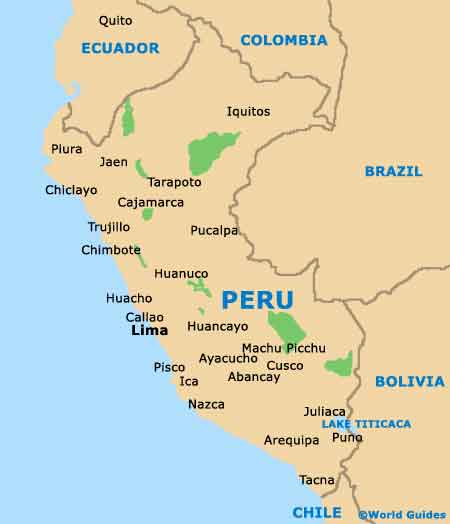
Pop quiz - can you find Huancayo on the map? 
Hint: At roughly 10,000 feet high it is in the mountains of Peru.